

In metal fabrication, welding equipment needs to match more than the joint itself. Buyers usually need to consider workshop power conditions, material range, movement between workstations, and how easily the machine can be integrated into daily production. An air cooled handheld laser welding machine fits this type of environment because it keeps the system more compact, reduces auxiliary equipment, and supports flexible use in workshops, repair work, and on-site applications.
This model is suitable for stainless steel, carbon steel, aluminum alloy, galvanized sheet, iron, and similar thin to medium metal materials. It is intended for users who want cleaner weld seams, lower deformation, reduced finishing work, and a simpler operating process in a 220V working environment.

What Production Needs Does This Product Meet?
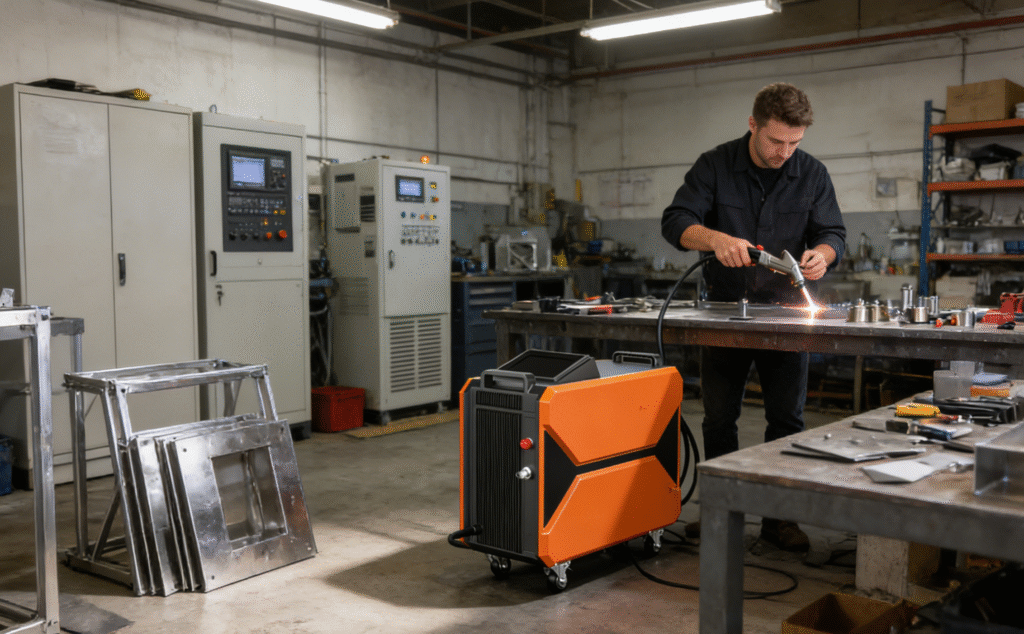
In many workshops, welding efficiency is influenced by installation complexity, equipment footprint, and the amount of setup needed between jobs. A simpler cooling structure helps reduce surrounding support equipment, which is useful where space is limited or where the machine needs to move between different work areas.
This also matters in production environments where materials, part types, and welding tasks change regularly. Easier parameter matching can help reduce setup time and support more consistent operation across routine fabrication, repair work, and small batch jobs. Faster welding speed, cleaner seams, lower deformation, and less grinding or polishing after welding can also help reduce labor input in post-processing.
Suitable Materials, Workpieces, and Applications
The machine is suitable for several common fabrication materials, including stainless steel, carbon steel, aluminum alloy, galvanized sheet, and iron within the applicable thickness range.
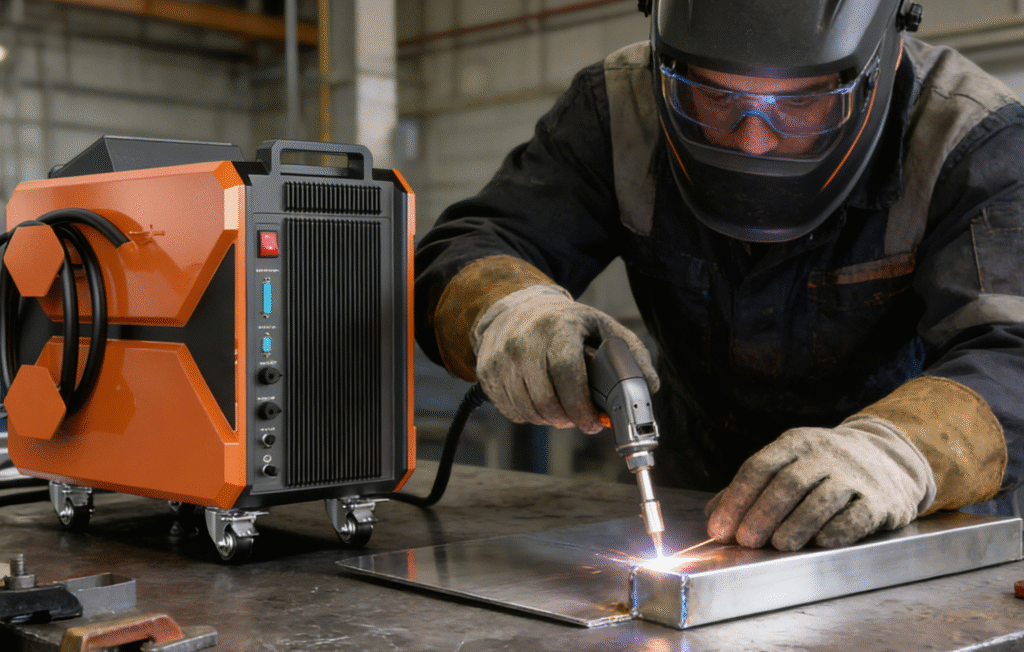
Typical applications include:
| Application Area | Suitable Work |
|---|---|
| Sheet metal fabrication | General sheet metal joining and light fabrication work |
| Cabinets and enclosures | Metal cabinet bodies, enclosures, and similar welded structures |
| Stainless steel products | Stainless steel fabrication and assembly |
| Doors and windows | Metal frame welding and related production |
| Kitchen equipment | Stainless steel and light metal assembly work |
| Hardware processing | Small fabricated metal parts and routine welding |
| Repair and maintenance | On-site repair and maintenance work |
| Custom fabrication | Small batch and variable-order production |
This makes the machine suitable for workshops handling multiple materials and changing production tasks rather than only one fixed product type.
Practical Advantages in Real Production or Project Use
A main advantage of the air cooled design is simpler system structure. Without an external water chiller, water tank, pump, or cooling pipeline, installation is more direct and the cooling-related maintenance burden is reduced. This is useful in workshops that want a more compact welding setup.
The 220V power supply also makes installation more practical in many standard workshop environments. For users working in existing facilities, this can make deployment easier without adding more complex power arrangements.
Main Specifications at a Glance
| Category | Data |
|---|---|
| Cooling method | Air cooled |
| Power supply | 220V |
| Machine size | 660 × 340 × 550 mm |
| Main machine weight | 30 kg |
| Automatic wire feeder weight | 20 kg |
| Total weight | About 50 kg |
| Handheld welding gun weight | 550 g |
| Swing width | 8 mm |
| Operation support | Material and thickness parameter matching, fine thickness selection, multiple wire specifications |
Air Cooled and Water Cooled: Which Working Style Is More Suitable?
The choice depends mainly on working conditions.
| Comparison Point | Air Cooled | Water Cooled |
|---|---|---|
| Cooling structure | No external water chiller required | Requires water tank, pump, and cooling pipeline |
| Equipment footprint | More compact | Usually larger |
| Installation | Simpler | More setup required |
| Mobility | Easier to move | Better suited to fixed locations |
| Working style | Flexible production, workshop movement, on-site tasks | More stable fixed factory arrangement |
For workshops that need compact equipment, easier deployment, and more movement between tasks, air cooled equipment is often the better fit. For fixed continuous production in a larger factory layout, water cooled equipment may be considered depending on the production setup.
Available Power Options and Weldable Thickness
Power selection should be based on actual material type and thickness. The available options are 850W, 1250W, and 1500W.
Weldable Thickness by Power Option
| Power Option | Stainless Steel | Aluminum Alloy | Carbon Steel | Galvanized Sheet |
|---|---|---|---|---|
| 850W | 0.5–2.0 mm | 0.8–1.5 mm | 0.5–2.0 mm | 0.5–2.0 mm |
| 1250W | 0.5–2.5 mm | 0.8–2.0 mm | 0.5–2.5 mm | 0.5–2.5 mm |
| 1500W | 0.5–3.0 mm | 0.8–2.5 mm | 0.5–3.0 mm | 0.5–3.0 mm |
For thinner materials and lighter routine work, a lower power option may be sufficient. For thicker workpieces or broader daily production demand, a higher power option may be more suitable.
Who Is This Product Suitable For?
This machine is suitable for users who need a compact and flexible welding solution rather than a large fixed system.
| User Type | Why It Fits |
|---|---|
| Small and medium metal fabrication workshops | Compact structure and easier installation |
| Stainless steel product workshops | Suitable for stainless steel fabrication work |
| Door, window, cabinet, and enclosure producers | Matches common sheet metal and frame applications |
| Maintenance and installation teams | Easier movement and field use |
| Workshops with 220V power conditions | Directly matches available power environment |
| Distributors | Suitable for markets needing flexible handheld welding equipment |
It is especially suitable where jobs change frequently, materials vary, and a simpler daily operating process is preferred.
What Should Buyers Confirm Before Asking for a Quote?
Before sending an inquiry, it helps to prepare the details that affect model selection.
Information to Prepare Before Inquiry
| Inquiry Item | Why It Matters |
|---|---|
| Material type | Affects weldability and power selection |
| Thickness range | Helps determine suitable machine power |
| Product or weld joint photos | Helps identify actual welding conditions |
| Power supply condition | Confirms installation suitability |
| Use scenario | Distinguishes workshop, repair, or on-site application |
| Welding joint style | Supports more accurate selection |
| Expected daily working hours | Helps judge production intensity |
| Delivery country or target market | Useful for quotation arrangement |
Clear application details help narrow down the suitable power option and improve quotation accuracy.
Request a Quote
If you are selecting a handheld laser welding machine for stainless steel, carbon steel, aluminum alloy, galvanized sheet, or similar metal fabrication work, send your material type, thickness range, weld joint details, power condition, and intended application. Clear project information helps match the right configuration and quotation to the actual working requirement.
FAQ
1. What is the main practical advantage of an air cooled handheld laser welding machine?
The main advantage is a simpler equipment structure. Without an external water cooling system, the machine is more compact, easier to install, and easier to move within the workshop or between job sites.
2. Is this machine suitable for workshop and on-site work?
Yes. The compact structure, 220V input, and easier movement make it suitable for workshop production, repair work, and flexible on-site applications.
3. What information is most important before model selection?
The key details are material type, thickness range, weld joint style, power supply condition, and expected use scenario. These factors help determine which power option is more suitable.