

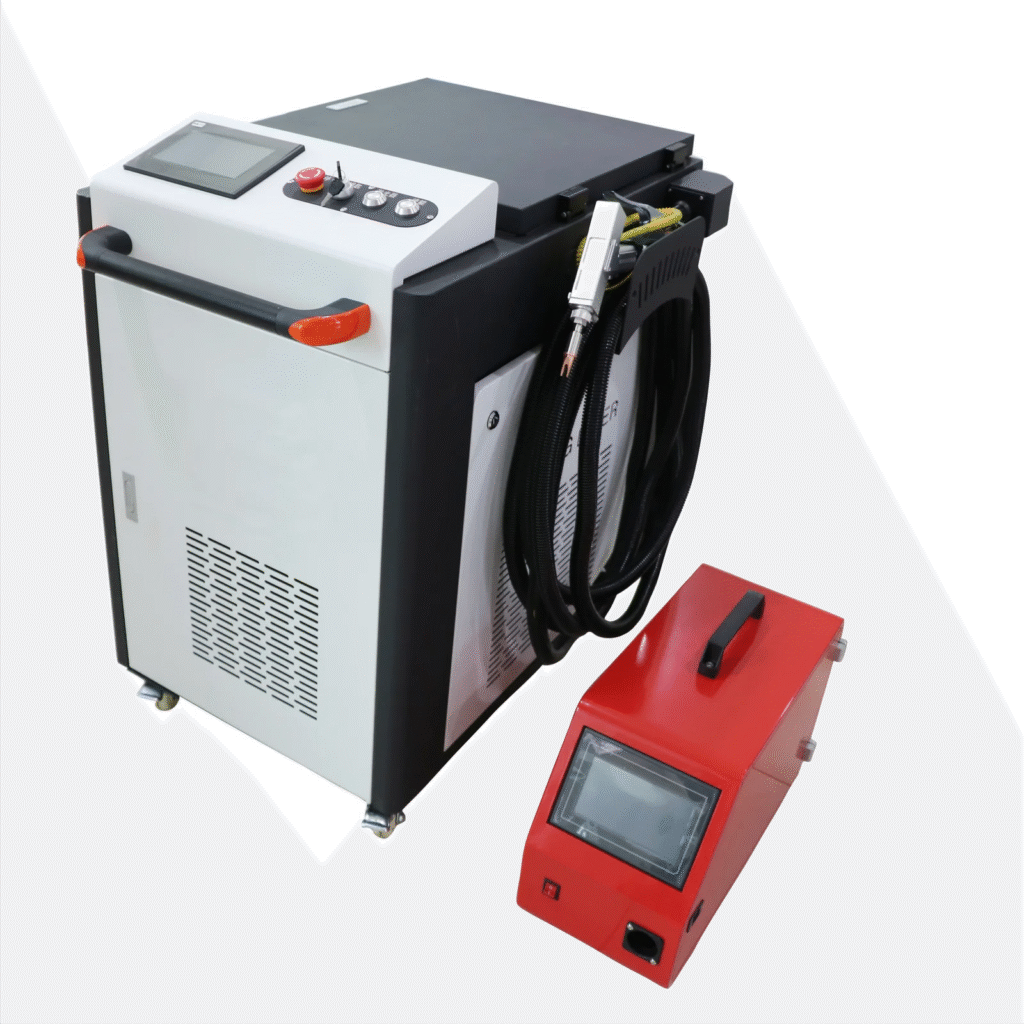
In metal fabrication, a welding process usually fails long before the seam fails. The real loss often comes from distortion on visible parts, rework after welding, slow joint completion, and dependence on highly experienced welders for routine production. A handheld laser welding machine is built for that gap between “can weld” and “can weld efficiently.” It is intended for stainless steel, carbon steel, aluminum, copper, galvanized sheet, iron, and other common metals, with power options matched to thin sheet metal through medium-thickness materials.
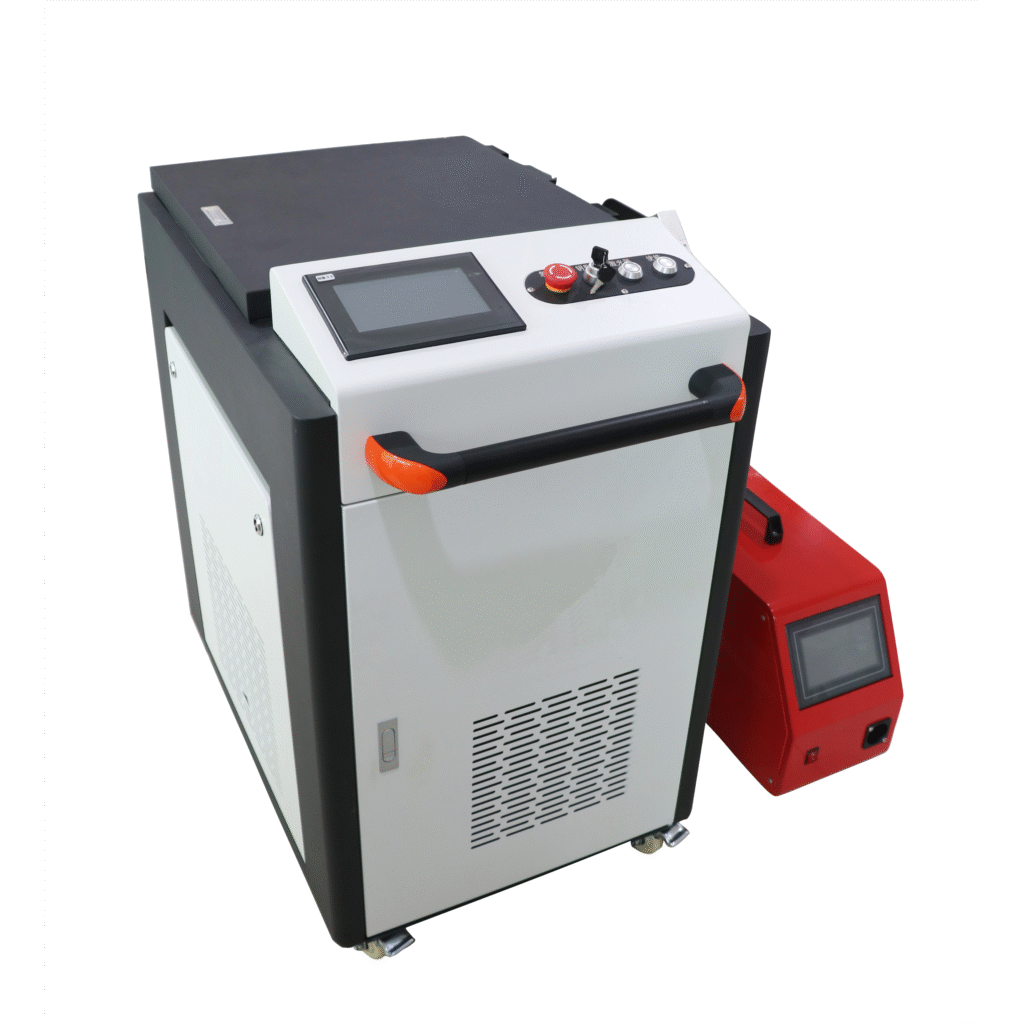
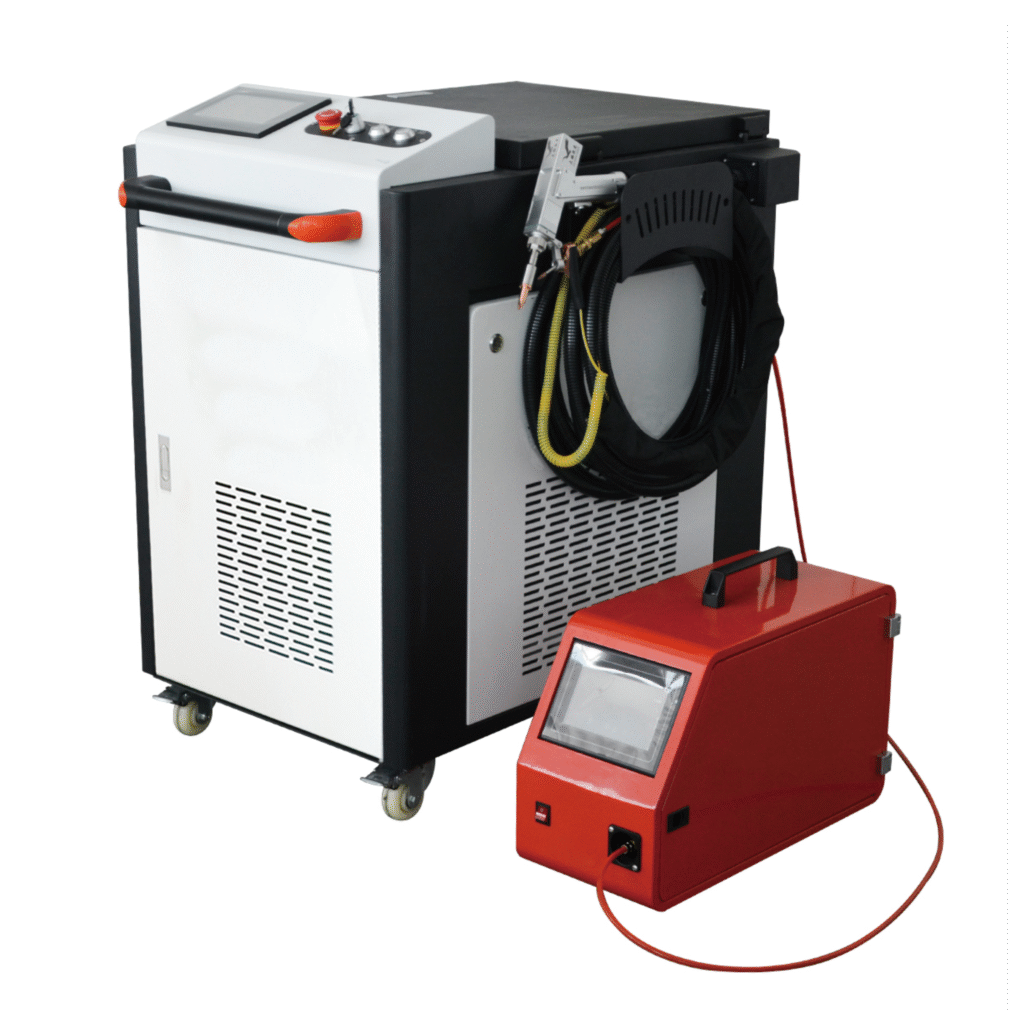
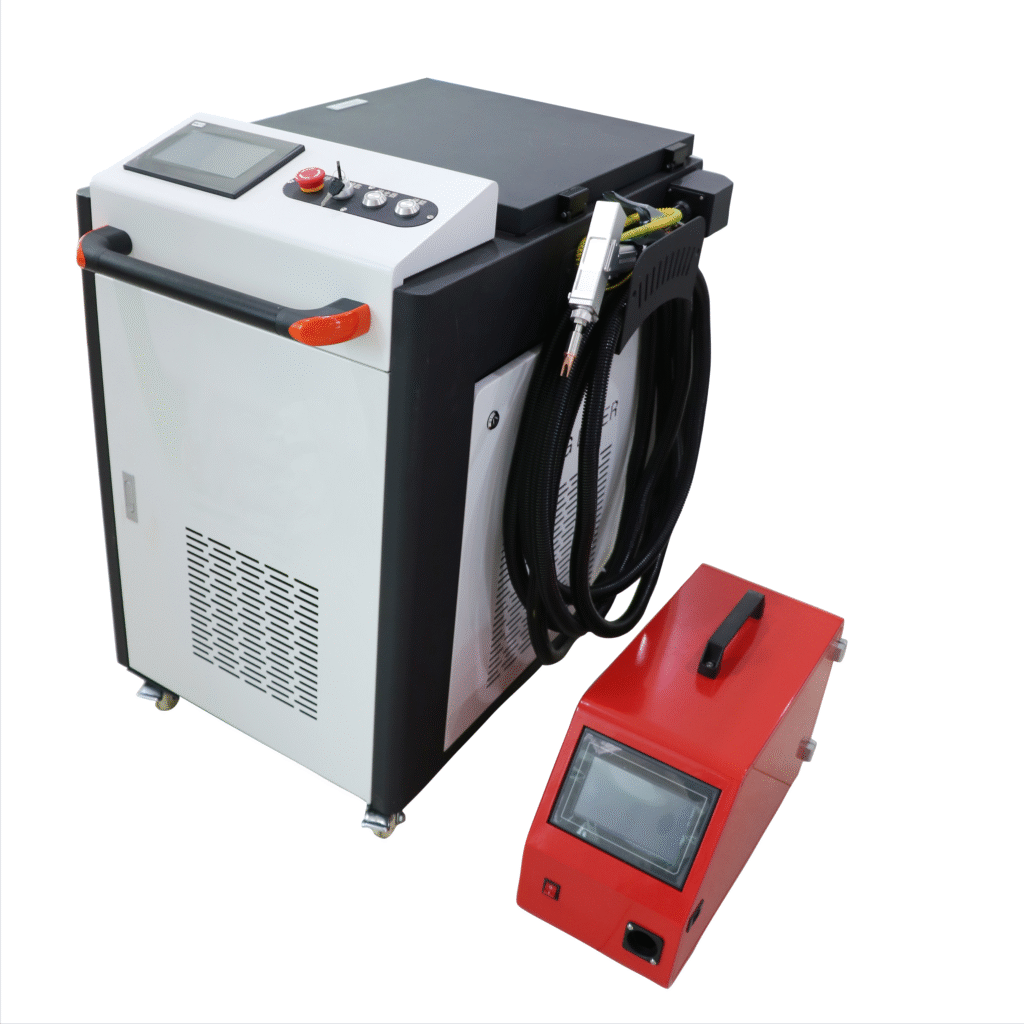
This handheld laser welding machine is suited to workshops that need faster welding, cleaner seams, and lower heat deformation than conventional welding methods, while still covering practical weld forms such as spot welding, butt welding, lap welding, and seal welding. For fabrication shops, hardware producers, and repair work, that combination matters because it affects both throughput and downstream finishing time.
Where the Technical Parameters Solve Real Production Problems
A high-energy-density laser beam focused into a very small area creates a concentrated heat source at the weld point. In practical terms, that concentrated input is why the machine is described with a high depth-to-width ratio, narrow weld seams, a small heat-affected zone, minimal deformation, and fast welding speed. Those are not abstract specifications. They are process features that help when the workpiece must stay dimensionally stable, the seam must remain clean, or the next process cannot absorb excessive grinding and correction.
The general welding thickness range is stated as 0.5 mm to 6 mm, and the machine is offered in 1500W handheld laser welding machine, 2000W handheld laser welding machine, and 3000W handheld laser welding machine configurations. That gives buyers a practical way to match equipment selection to actual production thickness rather than choosing only by machine name. For stainless steel laser welding, the thickness range moves from 0.5–3 mm at 1500W to 0.5–6 mm at 3000W. For aluminum laser welding, it moves from 1–2.5 mm to 1–5 mm. Carbon steel laser welding, iron welding, and galvanized sheet welding are also covered across the stated power range.
A Practical High-Loss Scenario Without the Right Welding Setup
If the welding process introduces excessive heat, even small deformation can push panels out of tolerance, create fit-up problems at the next station, and add labor in grinding, straightening, and surface cleanup. If the same shop also handles galvanized sheet or aluminum parts, process instability becomes even more expensive because rework is no longer limited to one product family.
In that kind of workload, slow welding speed and heavy dependence on experienced manual welders can turn into a scheduling problem rather than only a welding problem. The stated advantages—faster welding, cleaner seams, lower deformation, reduced post-processing, and support for multiple weld forms—directly address that kind of loss. Test data states a speed of about 5 to 10 times that of traditional welding, which is meaningful where welding time affects batch turnover and labor allocation.
Built for Metal Work That Changes From Job to Job
This laser welding machine for metal fabrication fits production environments where the work does not stay fixed. It is suited to metal fabrication workshops, hardware manufacturers, and repair applications, which suggests a workflow where different metals, thicknesses, and joint forms appear in the same operating cycle. That flexibility matters because many shops do not run one repetitive part all day. They move between thin sheet work, medium-thickness joining, repair tasks, and different seam requirements.
The combination of a fully automated welding system with a fully automated wire-feeding system is also intended to enhance efficiency. In process terms, that supports a more consistent welding rhythm where output depends not only on operator technique, but also on how steadily the equipment handles the feed and weld cycle.
Why Manufacturer Direct Sourcing Matters
For buyers comparing equipment budgets, Manufacturer Direct procurement is not only about initial pricing. It is also about reducing intermediary layers when selecting configuration, confirming weldable thickness, arranging training, and securing spare parts support. This is particularly relevant for buyers looking for a handheld laser welding machine manufacturer, a handheld laser welding machine supplier, or a handheld laser welding machine for sale with direct technical communication.
That structure is useful for buyers who want technical communication tied closely to the equipment source rather than routed through multiple parties. It also helps keep configuration matching more practical when the work involves different metals, varying thicknesses, or multiple weld forms.
Key Component Reliability and Daily Use Confidence
What matters in daily use is key component reliability, machine stability, and how faults are supported when production is running. The machine includes a one-year quality warranty for the whole machine, one year of service and parts warranty for the system, free repair or replacement for inherent quality issues during the warranty period, long-term spare parts availability, remote service support, software upgrade support, and lifetime maintenance service.
Training is also part of reliability in practice. A training period of no less than three days is described, covering laser basics, machine structure, operation, maintenance, processing techniques, and safety. For buyers trying to reduce dependence on senior traditional welders, that matters because repeatable output depends on both machine behavior and operator onboarding.
Operating Cost and Labor Logic
The machine requires only a small amount of gas during operation, with argon generally recommended, and hourly power consumption is listed at about 4–5 kW. That gives buyers a more grounded basis for evaluating operating conditions in day-to-day workshop use. The machine is also designed so that personnel with minimal training can operate the equipment and achieve practical welding results. Whether the buyer is running metal fabrication, hardware processing, or repair service, that has a direct link to labor flexibility and staffing pressure.
Request a Quote
If your work involves stainless steel, carbon steel, aluminum, copper, galvanized sheet, or similar metals, send your material type, thickness range, weld form, and application details. That makes it easier to match the right handheld laser welding machine configuration—1500W, 2000W, or 3000W—to your actual fabrication, repair, or hardware production requirements.
FAQ
1. What materials can this handheld laser welding machine process?
It is suitable for copper, aluminum, iron, stainless steel, carbon steel, galvanized sheet, and other common metals, with a general welding thickness range of 0.5 mm to 6 mm depending on material and power level.
2. How do buyers choose between 1500W, 2000W, and 3000W?
Selection should be based mainly on material type and thickness. The thickness ranges differ by power level, especially for stainless steel laser welding, aluminum laser welding, carbon steel laser welding, and galvanized sheet welding.
3. What support is available after purchase?
The support structure includes technical training, a one-year quality warranty for the whole machine, one year of service and parts warranty for the system, remote assistance, spare parts supply, software upgrade support, and lifetime maintenance service.