

In modern manufacturing, product identification is no longer just about labeling—it is about traceability, compliance, durability, and brand protection. Among various marking technologies, fiber laser marking has become the dominant solution for hardware tools and industrial components.
For manufacturers and exporters, especially in metal processing industries, fiber laser systems provide a stable, high-precision, and maintenance-friendly solution that traditional printing or engraving methods cannot match.
In this article, we will explore why fiber laser marking is widely used for hardware and tool identification, and how it supports long-term industrial production needs.
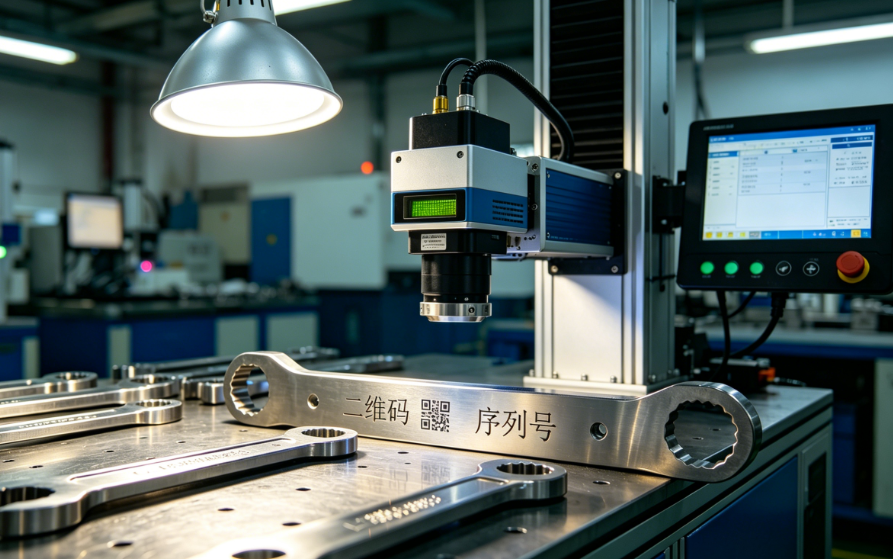
What Is Fiber Laser Marking?
Fiber laser marking is a process that uses a high-energy laser beam transmitted through optical fiber to permanently mark the surface of metal and certain plastics.
Unlike ink-based printing or mechanical engraving, fiber laser marking changes the surface structure of the material itself. This creates a permanent, high-contrast mark that does not fade, wear off, or require consumables.
Common applications include:
- Serial numbers on tools
- QR codes for traceability
- Logos and branding on hardware
- Batch codes for industrial parts
Modern systems are widely integrated into production lines and automated manufacturing environments. You can explore typical industrial solutions here: fiber laser marking machines
Why Fiber Laser Marking Is Ideal for Hardware and Tools
1. Permanent and Wear-Resistant Marking
Hardware tools are often exposed to friction, oil, heat, and harsh working environments. Traditional labels or ink markings easily fade or peel off.
Fiber laser marking solves this issue by creating a permanent mark directly on the material surface. Even under extreme industrial use, the marking remains readable for the lifetime of the product.
This is particularly important for:
- Hand tools (wrenches, pliers, screwdrivers)
- Cutting tools
- Machine components
- Industrial molds and dies
2. High Precision for Small and Complex Details
Modern hardware products require extremely small and detailed identification marks, such as micro QR codes or fine serial numbers.
Fiber laser systems offer micron-level precision, making it possible to mark:
- Very small fonts
- Dense QR codes
- Complex logos
- Fine technical identifiers
This level of precision is essential for traceability systems in global supply chains.
3. No Consumables, Low Operating Cost
Unlike inkjet or chemical etching, fiber laser marking does not require:
- Ink
- Solvents
- Replacement print heads
Once installed, the system has minimal operating costs and low maintenance requirements. This makes it highly cost-effective for long-term industrial use.
Manufacturers looking for stable production solutions often prefer systems available through professional suppliers like industrial laser marking solutions.
4. High-Speed Marking for Mass Production
In hardware manufacturing, efficiency is critical. Fiber laser marking systems are capable of high-speed operation, making them suitable for:
- Production lines
- Batch processing
- Automated conveyor systems
Marking time can be reduced to seconds per part, significantly improving overall production efficiency without sacrificing quality.
5. Strong Compatibility with Metals and Industrial Materials
Fiber laser marking performs exceptionally well on a wide range of materials commonly used in hardware and tools, including:
- Stainless steel
- Carbon steel
- Aluminum
- Brass
- Titanium alloys
This versatility makes it a standard solution across different manufacturing sectors.
6. Supports Traceability and Anti-Counterfeiting
With increasing global supply chain complexity, traceability has become a key requirement for manufacturers.
Fiber laser marking enables:
- Unique serial tracking
- Batch identification
- QR code-based digital traceability
- Anti-counterfeit branding
This helps manufacturers protect product authenticity and comply with international quality standards.
Industrial Use Cases in Hardware and Tool Manufacturing
Fiber laser marking is widely used in:
- Hand tool manufacturers (branding + serial numbers)
- Automotive parts suppliers (traceable components)
- Machinery equipment factories (model and batch codes)
- CNC machining workshops (part identification)
- Export hardware brands (anti-counterfeit labeling)
In many factories, fiber laser systems are now integrated directly into production workflows rather than used as standalone equipment.
You can learn more about application-focused solutions here: fiber laser marking applications
Why Manufacturers Are Switching to Fiber Laser Technology
The shift from traditional marking methods to fiber laser technology is driven by three main industrial needs:
- Long-term durability
- Production efficiency
- Lower operational cost
Compared with ink printing or mechanical engraving, fiber laser marking offers a more stable, scalable, and automation-ready solution. This is especially important for manufacturers targeting international markets where compliance and traceability standards are strict.
Choosing the Right Fiber Laser Marking System
When selecting a system for hardware and tool identification, manufacturers should consider:
- Laser power (commonly 20W–100W depending on material)
- Marking speed and accuracy
- Software compatibility (barcode/QR generation)
- Integration with production lines
- Cooling and stability design
Working with an experienced supplier ensures better system configuration and long-term reliability. Many industrial buyers evaluate providers such as laser marking machine supplier for factory-level solutions.
Conclusion
Fiber laser marking has become the industry standard for hardware and tool identification due to its durability, precision, speed, and cost efficiency. As manufacturing continues to move toward automation and traceability, laser marking technology will play an even more critical role in industrial production.
For manufacturers aiming to improve product identification quality and production efficiency, adopting fiber laser marking is no longer optional—it is a long-term competitive advantage.