

Stainless steel is one of the most common materials used in laser marking. It is widely found in hardware, tools, nameplates, medical parts, kitchen products, electronics housings, and industrial components.
For buyers, choosing a fiber laser marking machine for stainless steel is not only about whether the material can be marked. The more important question is whether the machine matches the actual part, marking content, and production routine.
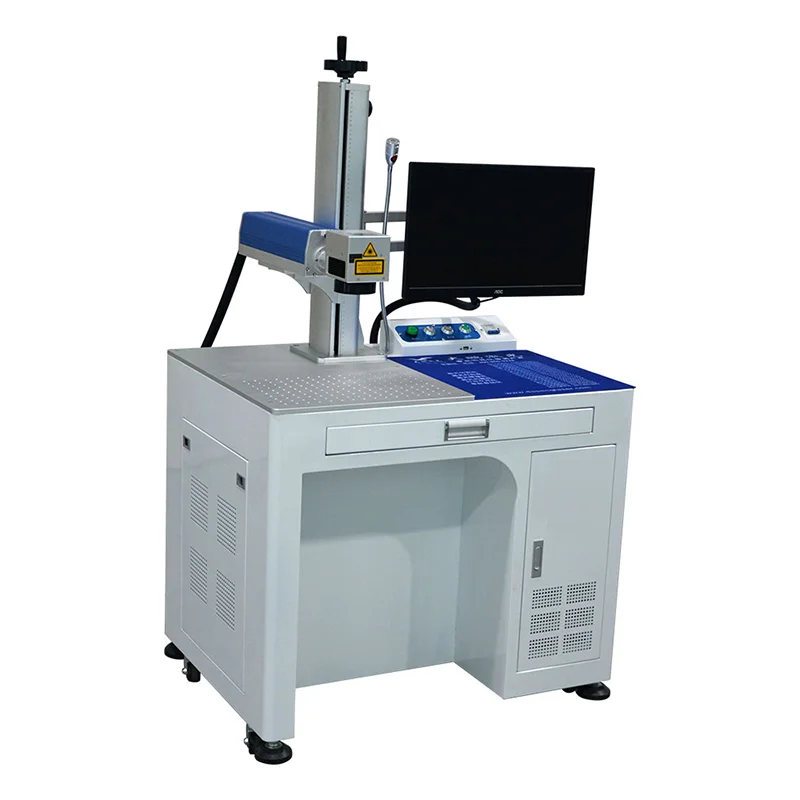
Start With the Part, Not the Machine
A flat stainless steel plate is very different from a round pipe, small fitting, or polished component.
Before comparing machine options, buyers should first confirm:
- part shape
- part size
- surface finish
- marking position
- marking content
These points affect both machine setup and expected result.
Clarify the Marking Requirement
Stainless steel marking is not always the same job. Some buyers need logos. Some need serial numbers, QR codes, or barcodes. Others only need permanent text for identification.
It is easier to choose the right machine when the requirement is clear. Buyers should know:
- what needs to be marked
- how large the marking area is
- whether the mark is for branding, traceability, or basic identification
- whether the work is occasional or part of daily production
Production Volume Matters
A machine that works for sampling may not be the best choice for batch work.
If the application involves repeated daily marking, buyers should think about:
- daily quantity
- marking speed
- code or serial number changes
- fixture needs
- operator workflow
In many cases, production routine matters more than broad machine descriptions.
Flat Parts and Round Parts Need Different Thinking
Many stainless steel products are not flat. Tubes, pipes, rings, shafts, and other round parts may require a rotary setup.
This is one of the details buyers should confirm early. If the part shape is not clearly mentioned, the recommended machine configuration may not fully match the application.
Sample Testing Is Worth Doing
A supplier may say that fiber laser can mark stainless steel, but actual results still depend on the real part.
Sample testing is especially useful when the job involves:
- polished stainless steel
- small characters
- fine logos
- QR codes
- cylindrical parts
- batch consistency requirements
Testing with the actual sample usually gives a much more useful basis for decision-making.
Better Inquiries Usually Get Better Recommendations
Instead of asking only for a quotation on a stainless steel laser marking machine, buyers should send more complete application details.
Useful information includes:
- part photos
- dimensions
- surface finish
- marking content
- marking size
- daily quantity
- whether the part is flat or round
This usually leads to a more accurate recommendation and reduces unnecessary back-and-forth.
Conclusion
Choosing a fiber laser marking machine for stainless steel parts should start with the actual job, not just the machine category.
Part shape, marking content, production volume, and traceability needs all affect what setup makes sense. Buyers who clarify these details early usually make better purchasing decisions and get more useful quotations.
FAQ
What should be checked before choosing a fiber laser marking machine for stainless steel parts?
The main points include part shape, part size, surface finish, marking content, marking area, daily quantity, and whether the part is flat or cylindrical. These factors affect machine configuration and marking suitability.
Is fiber laser marking suitable for stainless steel parts?
Yes. Fiber laser marking is widely used for stainless steel parts because it can produce permanent marks for logos, serial numbers, text, barcodes, and QR codes in many industrial applications.
What information is needed before requesting a quotation for stainless steel laser marking?
Useful information includes part photos, dimensions, surface finish, marking content, marking size, daily quantity, and whether the part is flat or round. This helps improve quotation accuracy.
Does stainless steel surface finish affect laser marking results?
Yes. Polished, brushed, coated, and untreated stainless steel surfaces may respond differently during marking, so the actual part condition should be considered before machine selection.
When is a rotary device needed for stainless steel laser marking?
A rotary device is often needed when the stainless steel part is cylindrical or curved, such as tubes, pipes, rings, shafts, or similar round components.
What marking content is commonly applied to stainless steel with fiber laser?
Common marking content includes logos, part numbers, serial numbers, barcodes, QR codes, date codes, and permanent identification text.
Why is sample testing important for stainless steel laser marking projects?
Sample testing helps confirm the actual marking result on the real stainless steel part, especially when the application involves polished surfaces, fine logos, small characters, QR codes, or batch consistency requirements.
What factors affect fiber laser marking machine selection for stainless steel production?
Machine selection is usually influenced by part geometry, surface condition, marking content, production volume, traceability requirements, and whether the application involves flat or round parts.