

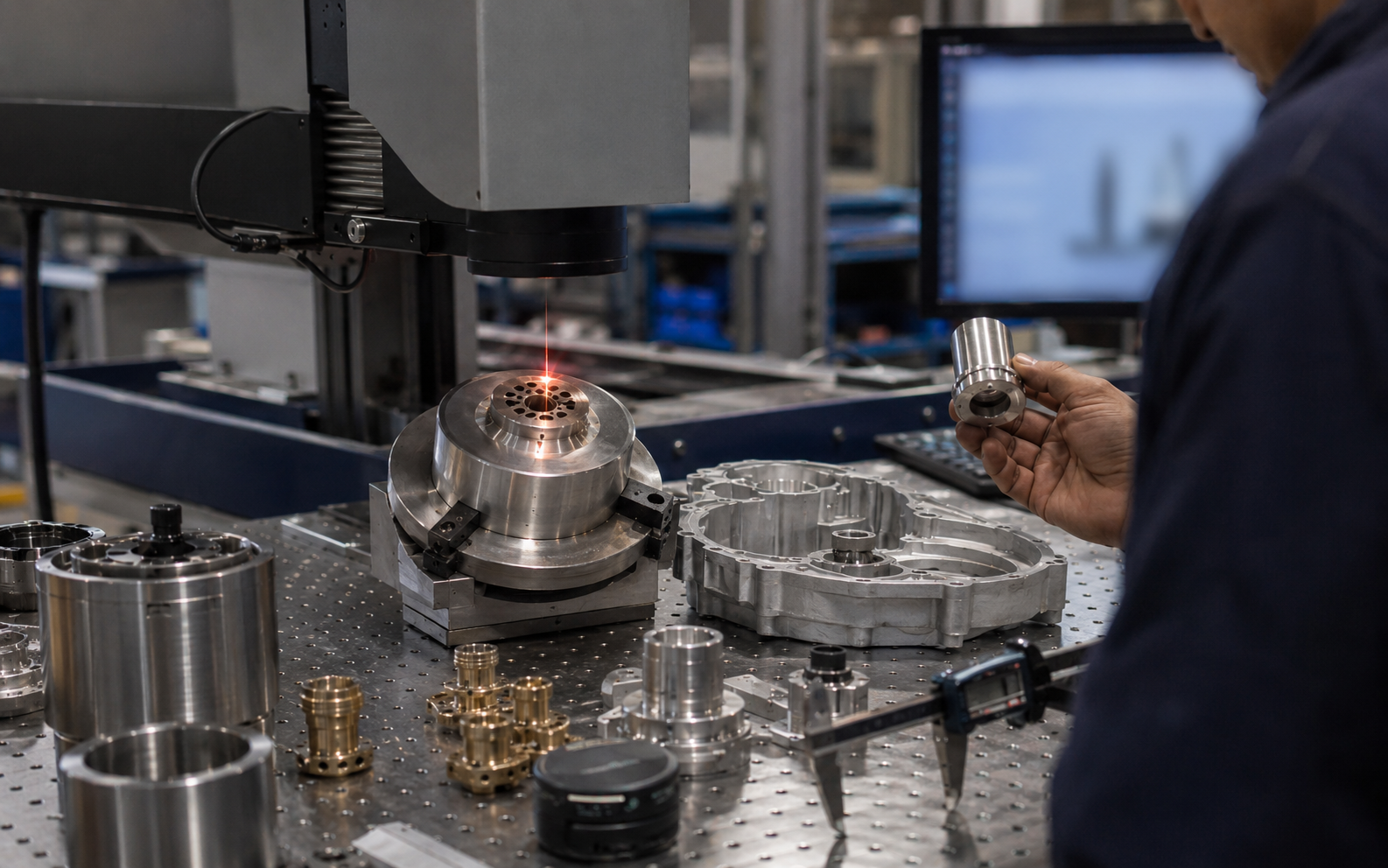
Choosing the right fiber laser marking machine for metal parts is an important investment decision for manufacturers, metal processing companies, and laser engraving service providers.
A suitable laser marking system should not only create clear and permanent marks but also improve production efficiency, reduce operating costs, and maintain stable quality during long-term production.
However, different applications require different configurations. A machine used for stainless steel nameplates may not be the best solution for automotive components, electronic housings, molds, or precision mechanical parts.
This guide explains the key factors manufacturers should consider before purchasing an industrial fiber laser marking machine.
Understand Your Metal Marking Requirements First
Before selecting a laser marking machine, manufacturers should first understand their actual production requirements.
The correct configuration depends on several factors:
- Type of metal material
- Surface treatment and coating condition
- Required marking depth
- Logo, text, barcode, or QR code size
- Production quantity
- Required processing speed
- Automation requirements
For example, marking a serial number on stainless steel requires different parameters compared with deep engraving on industrial tools or mechanical components.
Manufacturers can review different solutions from our
laser marking machine range
to find a suitable configuration for their applications.
Choose the Right Laser Power: 20W, 30W, 50W or 100W
Laser power is one of the most important factors affecting marking speed, engraving depth, and production efficiency.
MADE Laser provides
fiber laser marking machines
with different power options to meet various industrial marking requirements.
| Laser Power | Typical Applications |
|---|---|
| 20W Fiber Laser | Suitable for fine marking applications including serial numbers, barcodes, logos, and small metal components. |
| 30W Fiber Laser | A practical choice for general industrial metal marking and medium production requirements. |
| 50W Fiber Laser | Recommended for faster processing, deeper engraving, and higher production volume. |
| 100W Fiber Laser | Suitable for demanding applications requiring stronger engraving capability and higher productivity. |
Higher laser power does not always mean better results. The best choice depends on the material, marking requirements, production volume, and required surface appearance.
Select the Correct Marking Area and Lens Configuration
The marking field directly affects the size of the working area and the balance between coverage and marking detail.
A smaller marking field can provide higher energy density and better detail for small characters, logos, and precision components.
A larger marking field is useful for larger products, industrial plates, and components that require fewer repositioning operations.
Before purchasing equipment, manufacturers should confirm:
- Maximum product size
- Required marking area
- Smallest marking details
- Position accuracy requirements
- Whether rotary marking is needed
Consider the Metal Materials You Process
Fiber laser marking technology is widely used for many industrial metals because it can create permanent marks without ink, labels, or mechanical contact.
Common applications include:
- Stainless steel components
- Aluminum housings
- Brass parts
- Copper components
- Carbon steel products
- Automotive parts
- Electronic enclosures
- Industrial tools
Different materials react differently to laser energy. Surface finish, alloy composition, coating, and hardness can influence marking contrast and engraving depth.
Professional suppliers should provide sample testing before final confirmation to ensure the selected machine matches the customer's actual materials.
Evaluate Production Speed and Manufacturing Efficiency
For metal processing businesses, machine productivity directly affects profitability.
When evaluating a fiber laser marking system, consider more than the marking speed.
- Loading and unloading time
- Fixture preparation
- Workpiece positioning
- Software operation efficiency
- Batch production capability
- Operator training requirements
A stable production workflow often creates more value than simply selecting the highest laser power.
Flat Parts or Cylindrical Parts: Do You Need Rotary Marking?
Many industrial components are not completely flat. Cylindrical products such as rings, pipes, bearings, and rotary parts require additional positioning solutions.
When processing irregular or large components, manufacturers may consider a
portable laser marking machine
for more flexible operation.
Before choosing accessories, confirm:
- Product shape
- Part diameter
- Required marking position
- Production quantity
- Need for automation
Check Machine Stability and Technical Support
For industrial users, equipment reliability is as important as initial purchase cost.
A professional laser marking supplier should provide:
- Stable machine structure
- Reliable laser components
- User-friendly marking software
- Application testing support
- Spare parts supply
- Technical assistance
Understanding the supplier's manufacturing capability and technical experience is also important before making a purchase decision.
You can learn more about our company background, production experience, and service capability on our
About MADE Laser
page.
Why Sample Testing Is Important Before Purchase
Every metal processing application has unique requirements. A sample test helps confirm whether the machine configuration can achieve the expected result.
A professional sample evaluation should check:
- Marking clarity
- Engraving depth
- Processing speed
- Surface appearance
- Repeatability
- Production suitability
Sending real samples and application details to the supplier can help avoid purchasing a machine that does not match actual production needs.
Fiber Laser Marking Machine Buying Checklist
Before placing an order, manufacturers should evaluate the following points:
- Laser power suitable for your application
- Required marking area and lens options
- Material compatibility
- Production speed requirements
- Fixture and automation options
- Software functions
- After-sales technical support
- Warranty and spare parts availability
Frequently Asked Questions
What metals can a fiber laser marking machine process?
Fiber laser marking machines are commonly used for stainless steel, aluminum, brass, copper, carbon steel, and many other industrial metal applications. The final result depends on material type and surface condition.
How much laser power do I need for metal engraving?
The required power depends on marking depth, production speed, material type, and application requirements. Many general metal marking applications use 20W to 50W systems, while deeper engraving may require higher power.
Is fiber laser marking permanent?
Yes. Fiber laser marking creates durable marks that are resistant to wear, making it suitable for product identification, traceability, and industrial applications.
Request a Fiber Laser Marking Solution
Choosing the right laser marking equipment requires understanding your materials, production requirements, and expected results.
Send your product information, material details, marking samples, and production requirements to our engineering team. We can help recommend a suitable fiber laser marking solution.